How to Host a Successful Open House: Ditch the Paper for Digital Lead Capture
Ditch the paper sign-in sheet. Get 22 open house ideas plus a digital sign-in app and QR-code lead capture to drive attendance and win more clients.
For decades, the standard procedure for an open house has stayed the same: put out a few signs, bake some cookies, and leave a clipboard by the front door. But if you're still relying on a paper sign-in sheet to build your database, you're leaving money on the table.
When listing agents ask how to host a successful open house in today's market, the answer is no longer just about staging and lighting — it's about data. Every person who walks through that door is a potential buyer or a future seller, and capturing their information accurately is the difference between a wasted Sunday and a pipeline full of high-quality leads.
To maximize your ROI, it's time to upgrade your tech stack and pick the best open house sign-in app for your business. Here's what separates the tools that actually grow your pipeline from the ones that just digitize a clipboard.
The Problem with Paper Sign-In Sheets
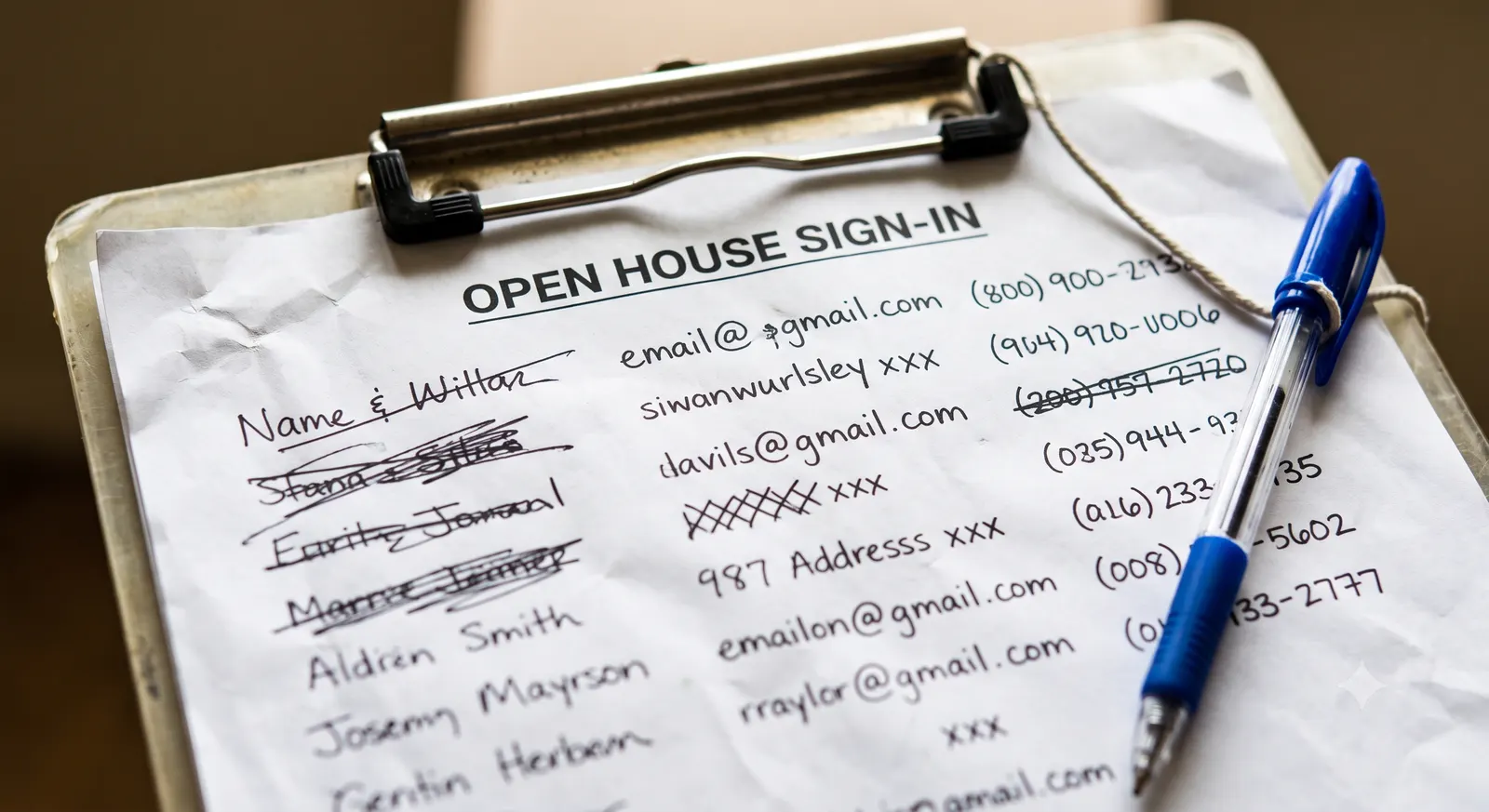
The traditional real estate clipboard is a conversion killer. If you rely on paper, you already know the pain points:
- Illegible handwriting. You spend Monday morning trying to decide whether an email address ends in
@gmail.comor@ymail.com. - Fake information. Without any verification, it's trivially easy for a visitor to write down a fake name or number — the classic "Mickey Mouse" lead.
- The bottleneck. When multiple groups arrive at once, a single clipboard creates a traffic jam at the front door, frustrating buyers before they've even seen the living room.
- Security blind spots. You have no reliable record of exactly who walked through your seller's home.
If your goal is effective real estate lead capture, friction is your worst enemy — and paper is nothing but friction.
Digital Check-Ins: The Future of Open House Visitor Registration
Top-producing agents are replacing the clipboard with a seamless digital sign-in. A platform like Deedo turns your open house from a passive viewing into an active lead generation engine.
Instant QR code access
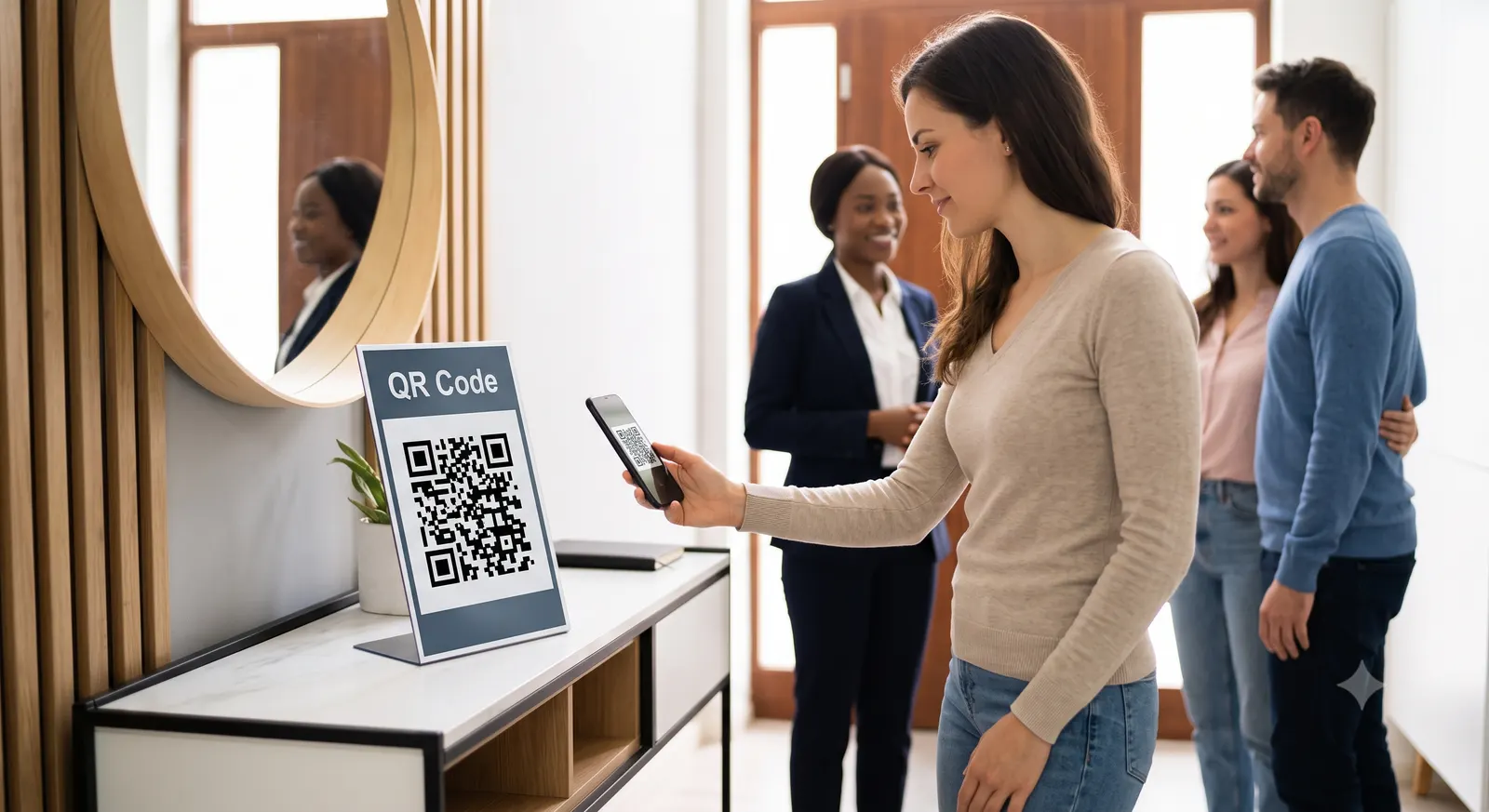
Instead of forcing visitors to wait in line for a shared pen, modern open house visitor registration runs on their own phones. Deedo lets you generate a property-specific QR code and place a clean placard at the entrance. Visitors scan it, and a digital check-in form appears instantly on their screen. Multiple groups can sign in at the same time, which completely eliminates the bottleneck at the door.
Cleaner data on entry
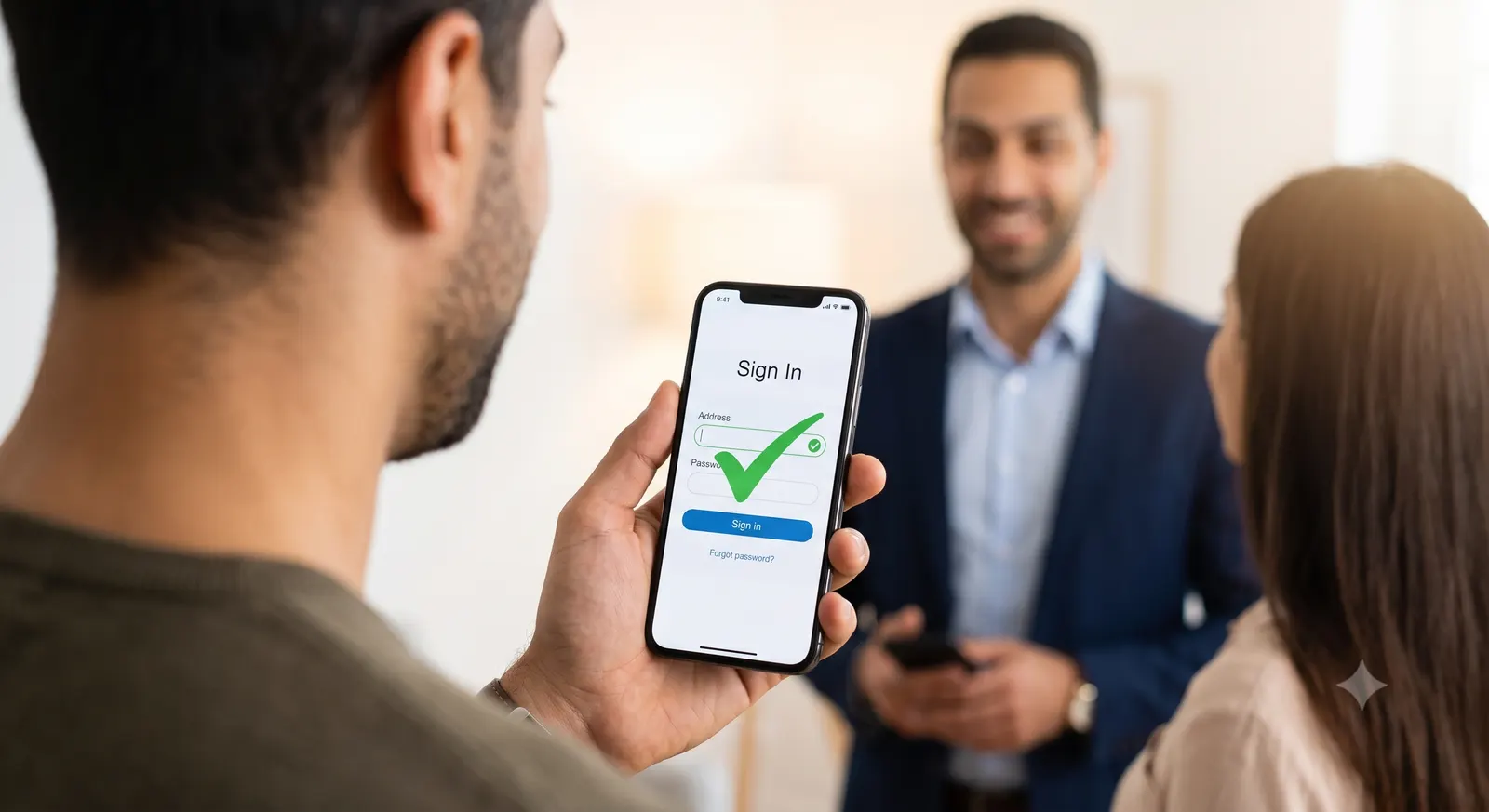
A lead is only worth something if the data is accurate. A good sign-in app validates the essentials at the moment of entry — required fields, correctly formatted email addresses and phone numbers — so obvious junk and mistyped contacts don't slip into your database. You capture far fewer dead-end entries, and the leads that reach your CRM are actually reachable.
Automating the follow-up
The fortune is in the follow-up — but after a long weekend of showings, manual follow-up is exhausting. With a digital QR code open house sign-in, the workflow starts the second the buyer taps submit. Because their contact data is already captured and structured, you don't spend Monday doing manual CRM entry. (For a deeper look at automating the back office around your listings, see our guide to getting more listings with workflow automation.)
Better still, that capture flows straight into Deedo's property-scoped chat and AI concierge. If a buyer loved the home and has an immediate question about the HOA or the disclosures, they can ask it right there — and the AI, grounded in the documents you uploaded for that specific listing, answers accurately while you're busy running the rest of the open house.
22 Open House Ideas to Drive Attendance and Capture More Leads
A great sign-in app captures the leads — but filling the room and working the follow-up is what actually fills your pipeline. With inventory rising in many markets and buyers gaining leverage, going above and beyond for your sellers matters more than ever. Here are 22 proven open house ideas, from pricing to follow-up.
Before the open house: preparation
- Price it right. Look beyond recent sales — study active, under-contract, expired, and cancelled listings too, weighting the most recent and most geographically similar homes. Then show the property at its best with staging and professional photography. The more clearly your listing reads as the best value on the market, the bigger your turnout.
- Host the right open houses. If you're covering open houses for other agents to build a pipeline, be selective: choose listings in the neighborhood and price point you actually want to be known for, not business an hour away.
- Choose the day and time deliberately. Pick a window that works for most buyers and avoid competing with big local events. Keeping the open house to a single hour concentrates attendance — when buyers see other buyers, perceived value and urgency climb, which (with correct pricing) can drive multiple offers.
- Add the open house to your MLS. It's easy to forget, but this is what syndicates the details to Zillow, Realtor.com, and other portals. Skip it and you cap your exposure before you've even started. Build a simple pre-open-house checklist so this never slips through the cracks.
Fill the room: promotion
- Tease it early on social media. Instead of posting the day before, start a week or two out with stories, reels, and posts — and consider a small ad spend to widen your reach. It also signals to your audience that you're an active, productive agent.
- Post in hyperlocal Facebook groups. Community groups put you in front of nearby buyers, and neighbors who know buyers. Check each group's promotional rules before you post.
- Email your sphere and past clients. Even contacts who aren't buying may forward the details. Invite them to stop by and say hello — a low-effort way to stay top of mind.
- Call your buyer leads. An upcoming open house is a natural, low-pressure reason to reconnect with buyers you haven't spoken to in a while. Invite them to visit or to pass the details to a friend who's looking.
- Send direct mail. Postcards scale beautifully — mail the whole neighborhood or every buyer you have an address for. Include a photo, the address, price, date, and time; an automated postcard service handles the printing and addressing for you.
- Invite your seller leads. Unconventional, but powerful: inviting prospective sellers to watch you market a home shows off your skills and builds trust. A busy open house is your best listing pitch.
- Run a neighbors-only preview. Offer neighbors a private look an hour before doors open. It makes them feel special, satisfies the naturally curious, and turns them into word-of-mouth marketers.
On the day: running the room
- Guide people in with signage. Directional signs from the main road plus a few balloons make a big, inexpensive visual impact. For high-rises, post clear entry instructions or bring a colleague to manage the door.
- Set up a welcome area. Usually the kitchen: brochures, your QR sign-in placard, tasteful branded swag people will actually keep, and water. Skip messy food to avoid crumbs and allergy liability.
- Greet every guest warmly. First impressions shape how buyers feel about the home. A simple, practiced welcome works — introduce yourself as the listing agent, point them to the sign-in, and offer to answer questions. Offer personal tours when it's quiet.
- Capture everyone's contact info. It's both lead generation and safety. As covered above, a digital QR or tablet sign-in beats paper for clean, complete data — and always ask whether the visitor is already working with a buyer's agent.
- Add a giveaway. People hand over contact details far more willingly when there's a prize. A gift card to a local restaurant or a basket of local goods doubles as community goodwill.
- Build genuine rapport. With unrepresented buyers and drop-in sellers, ask open questions — how long they've been looking, how this home compares to others they've seen. Inviting honest feedback ("it's not my house!") lowers their guard and gives your seller useful intel.
- Livestream it. A walkthrough livestream fuels your social channels and lets out-of-town buyers preview the home. Get your seller's permission first, and ideally a second person to run the camera.
- Bring a vendor partner. A lender or title partner adds a second set of hands for safety and crowd control, and gives buyers on-the-spot answers about financing and closing.
- Collaborate with nearby agents. When several homes are open the same day in one area, cross-promote. Point buyers who aren't a fit toward the other listings — or run a shared "visit them all" prize — and you position yourself as the local market expert.
After the open house: follow-up
- Segment attendees in your CRM. Split represented from unrepresented buyers right at sign-in. You'll follow up with each group differently, and you must respect existing buyer-broker relationships.
- Follow up with everyone, fast. For represented buyers, call their agent for questions and feedback. For unrepresented buyers, run your normal conversion process — buyer consultation, MLS search, and so on. Spot an unrepresented buyer who also needs to sell? That's a listing appointment. Keep adding value until they respond.
That last step is where most leads are won or lost. For the full playbook on turning open house sign-ins into signed clients, see our companion guide on how to convert more open house visitors into actual leads.
Better Security for You and Your Sellers
Beyond marketing, listing agents have a duty to protect their sellers' property, and a paper list offers zero security. Digital visitor logging creates a verified, timestamped record of exactly who entered the home and when. Because contact details are checked on entry, you have far more confidence in the identity of the people walking through — peace of mind for your seller and a safer environment for you.
Elevate Your Open House Experience
Hosting a successful open house takes more than foot traffic; it takes a systematic approach to capturing and converting that traffic. Ditch the paper clipboard, adopt a digital sign-in, and you'll capture cleaner data, give buyers a more premium experience, and free yourself from hours of manual entry.
Stop chasing fake phone numbers and start building a real pipeline. If you want the full playbook on turning those clean sign-ins into closed clients, read our companion guide on how to convert more open house visitors into actual leads — or see how the whole Deedo system works end to end.