
Real Estate Transaction Coordination: How to Stop Being the Human Switchboard
Contract-to-close is a coordination nightmare across too many parties and channels. Here's the timeline, the breakdowns, and how to centralize it all.

Getting a home under contract feels like the finish line. It's actually the starting gun for the most operationally demanding stretch of the deal — 30 to 60 days of real estate transaction coordination where a single missed deadline or dropped message can cost your client the home and cost you the relationship.
The problem isn't that agents don't work hard enough. It's that contract-to-close is a coordination problem spread across too many people and too many channels, with no single place that holds the truth. This guide breaks down the timeline, the specific ways communication falls apart, and how to stop being a human switchboard.
The Moment You Go Under Contract, You Become a Switchboard
A typical residential transaction pulls in roughly seven parties — the buyer, the buyer's agent, your seller, the lender, title/escrow, inspectors, and the appraiser — each with their own timeline and their own questions. By some industry estimates a single deal can carry well over a hundred discrete tasks and dozens of emails, and it all lands on you.

The truly maddening part is that most of this traffic is routing, not decision-making. You're forwarding an inspection report, confirming a wire time, telling the buyer's agent the appraisal is ordered, reassuring your seller that "no news is normal." Every message is small. Together they consume your week and bury the ones that actually matter.
Why Scattered Communication Kills Deals
When information lives across email chains, text threads, and voicemails, there is no single source of truth — and that's precisely where deals die. A deadline that lives in a text you didn't re-read is a deadline you'll miss.
And deals do die. NAR's REALTORS® Confidence Index has tracked contract terminations in the 4–7% range in recent years (around 6% in mid-2025), and the leading causes — inspection and repair disputes and financing falling through — are exactly the milestones that hinge on tight, timely coordination. Miss the inspection-objection window or let a lender's document request sit, and a deal that should have closed unravels.
The Real Contract-to-Close Timeline (and Where It Breaks)
The antidote to chaos is a shared master timeline built the moment you go under contract. Here's the consolidated arc of a financed residential deal, with the deadlines most often blown.
Launch (days 0–3) Open escrow and title, deliver the fully signed contract to every party, confirm the earnest-money deposit, and get the buyer's loan application in. Breaks here: a missed earnest-money deadline can put the buyer in default before you've begun.
Due diligence & inspections (roughly days 7–21) Schedule and complete the home inspection and any specialist inspections, review HOA documents, and start homeowners insurance. Breaks here: inspection-contingency deadlines are among the most commonly missed dates in the whole process.
Appraisal & financing (overlapping) The lender orders the appraisal; underwriting issues conditions and document requests. Breaks here: a low appraisal or a financing denial can end the deal, and slow responses to underwriting stall everything downstream.
Negotiation & repairs (around weeks 5–6) Negotiate the inspection response, verify repairs with receipts, review the title commitment, and remove contingencies. Breaks here: repair-credit disputes quietly push closing dates.
Pre-close (final 3 days) The buyer's Closing Disclosure must be delivered at least three business days before closing (a federal timing rule — see the CFPB's explanation), the final walkthrough happens 24–48 hours out, and wire instructions should be verified by phone to prevent fraud. Breaks here: a late or corrected Closing Disclosure resets the three-day clock and delays closing.
Close (day 30–60) Sign, fund, record, and hand over the keys.
Build this timeline once, share it with all parties, and the "what happens next?" questions largely answer themselves.
What "Keeping Everyone Updated" Really Demands
Whether you have a transaction coordinator or you are the transaction coordinator, the job is relentless: open the file, extract every key date from the contract, track inspection/appraisal/financing/contingency/closing deadlines, chase signatures and missing documents, coordinate every party, and keep clients calm and informed at each step.
Two things make it harder than it sounds. First, the "what's the status?" interruption loop — when parties can't see where the deal stands, they ping you constantly, and each ping fragments your attention. Second, the perception gap: clients rarely see the dozens of hours of behind-the-scenes work, so silence during a quiet stretch reads as neglect. The best coordinators set channel and cadence expectations on day one and send proactive updates — but doing that manually, across every deal, is exactly the load that burns agents out.
Fix the Root Cause: One Property-Scoped Thread Instead of Ten Channels
Most "solutions" just add another tool — a checklist app here, a one-way client portal there — while the actual conversation stays scattered across everyone's inbox. Deedo.ai attacks the root cause instead.
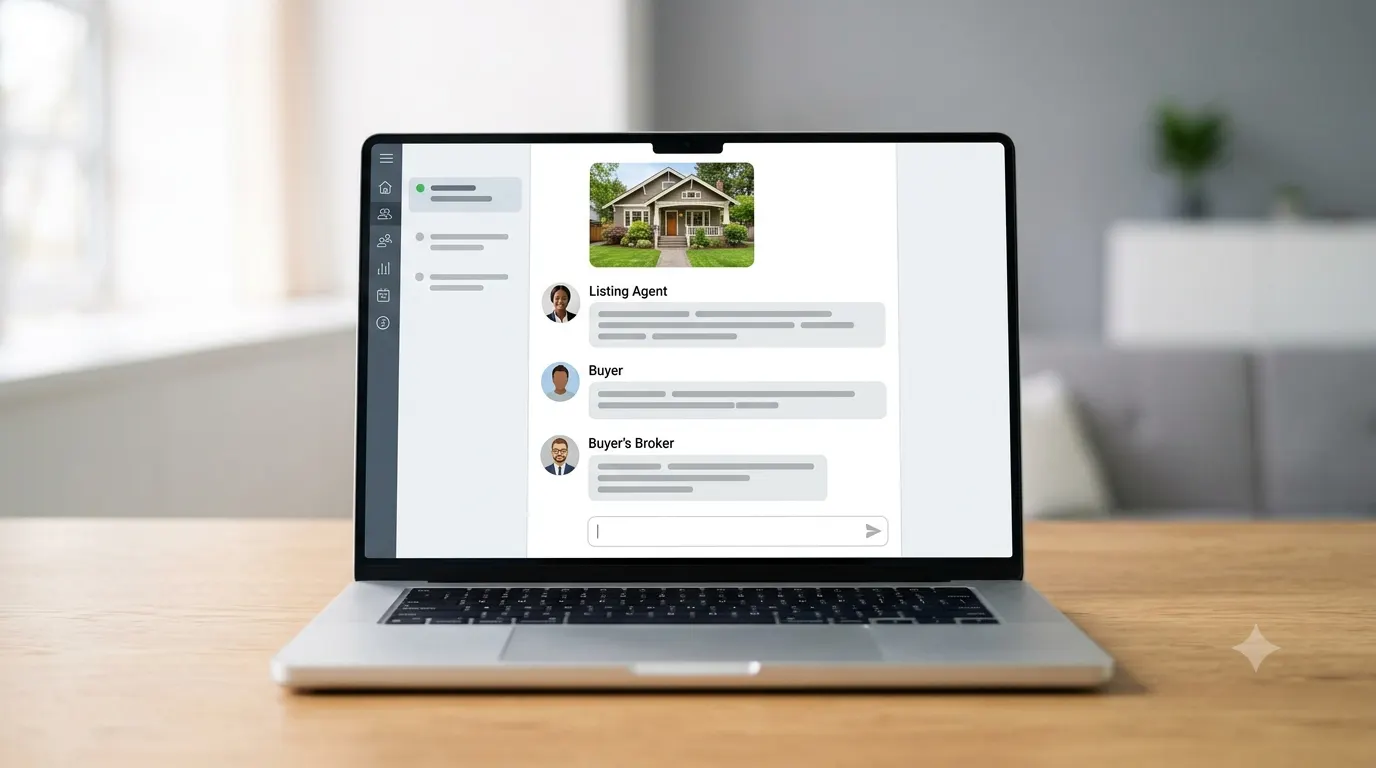
Deedo's property-scoped multi-party chat gives every transaction a single hub: the listing agent, the buyer, and the buyer's broker collaborate in one thread tied directly to the property and its transaction state. There's no forwarding, no "which email chain was that in," no version confusion — the conversation lives with the listing, not in ten separate inboxes. Because everything is in one place, it also becomes a clean, timestamped record for compliance, the way your transaction documents should be.
Let the AI Concierge Answer the Routine Questions
Centralizing the conversation solves the "where is it" problem. Deedo's AI Concierge solves the volume problem. Grounded strictly in the property's uploaded documents, it answers the routine status and document questions instantly — is the appraisal ordered, where's the HOA doc, what's the closing date — 24/7, without inventing anything. When a question genuinely needs your judgment, it escalates to you with a push alert. That combination breaks the interruption loop: routine questions self-serve, and you're pulled in only for the decisions that matter. (It's the same instant-but-accurate approach we cover in our guide to real estate lead response time.)
Frequently Asked Questions About Transaction Coordination
What are the main stages of a real estate transaction?
Most financed deals move through four stages: launch (opening escrow and financing), due diligence and inspections, appraisal and financing approval, and pre-close/closing. Each has its own deadlines and parties.
How long does it take to go from contract to close?
A financed residential sale typically takes 30 to 60 days; an all-cash purchase can close in one to two weeks.
What deadlines get missed most often between contract and closing?
Inspection-contingency and financing deadlines are the most commonly blown, followed by the federal requirement to deliver the Closing Disclosure at least three business days before closing.
What does a transaction coordinator actually do?
They open and manage the transaction file, track every deadline, coordinate all parties, chase documents and signatures, and keep clients informed — but they don't give legal or pricing advice or negotiate.
Do I need a transaction coordinator if I only close a few deals a year?
Not necessarily — but you still need a coordination system. A shared timeline and a single communication hub give a solo agent much of a TC's benefit without the hire.
How can a listing agent keep every party on the same page?
Build one master timeline at contract acceptance, set update expectations with everyone on day one, and centralize communication in a single property-tied thread instead of scattered emails and texts.
From Switchboard to Closer
Contract-to-close will always involve a lot of moving parts — but it doesn't have to run through your phone at all hours. Build the shared timeline, set expectations early, centralize every conversation in one property-scoped thread, and let an AI concierge absorb the routine questions. Do that and you stop being the switchboard and go back to being what your clients actually hired: the closer.
See how the whole Deedo system works end to end, or read our companion guide on real estate document management.